
Rejected by ... a bot?
What if your rejection email was written by an algorithm trained to ignore you?

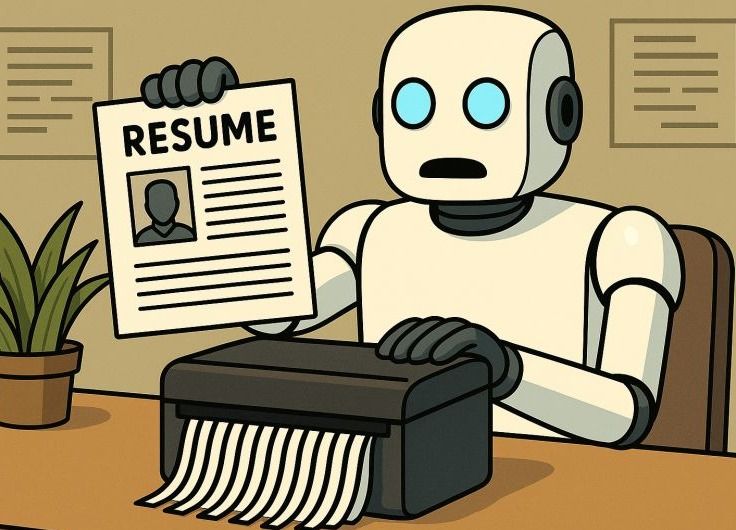
Delivered in seconds.
No once over or skim. No conversation.
Just code.
That’s exactly what’s behind the growing lawsuit against Workday—one of the world’s most widely used hiring platforms.
The claim?
That candidates over 40 were automatically screened out by artificial intelligence tools embedded in the hiring process.
And it’s not just Workday.
Why This is a Big Deal
If you've ever applied for a job online, you’ve used a recruiting software system—technically called an Applicant Tracking System, or ATS.
These platforms are supposed to help companies manage applications. But many of them now make decisions before a person ever reads your resume.
According to 2024 data from Apps Run the World, over half of all job applications globally are handled by just 10 major ATS software platforms. That’s millions of applications every single week.
And here’s the part no one likes to talk about:
At least six of those top 10 platforms have built-in features to make a hiring decision by auto-rejecting candidates.
The Biggest ATS Platforms (and Whether They Filter Automatically):
🔹 iCIMS – Yes: Auto Progression Rules
🔹 Oracle Taleo – Yes: Rules-based knockout filters
🔹 Workday – Yes: AI scoring and auto-disqualification logic
🔹 Greenhouse – Yes: Knockout questions and testing filters
🔹 Jobvite – Yes: Automated disqualification by logic
🔹 SmartRecruiters – Yes: Pre-screening and rejection triggers
Other popular platforms—like SAP SuccessFactors, UKG, Dayforce, and Paycom—don’t advertise this functionality, but many allow similar settings.
So automated rules are making hiring decisions—before a person ever has a chance to weigh in.
So when a company says “We never saw your application…”
That might be true.
The system saw it. Then rejected it.
If You’re a Job Seeker
That gut-punch rejection 90 seconds after completing that time consuming application? That was a system doing what it was set up to do.
Here’s how to improve your odds:
- Upload a clean PDF to avoid parsing errors
- Mirror the job description’s keywords and title
- Avoid fancy formatting (tables, graphics, symbols)
- Skip unnecessary date fields
- And most importantly: find someone
Referrals and introductions are still the strongest path through the digital gatekeepers.
And until these systems are redesigned for fairness?
Assume the process wasn’t built for you.
Then make sure someone sees you anyway.
If You’re a Hiring Leader
Here’s the hard truth:
You may be accountable for outcomes created by software you didn’t build and haven’t audited.
Many ATS platforms allow auto-rejection logic to be configured by default.
If you haven’t checked, it may already be happening.
Ask your HR team or vendor:
- What exactly causes a candidate to be rejected?
- Are any filters running before someone reviews a candidate?
- How do we track who’s being filtered and why?
- Are we confident this process holds up under legal scrutiny?
Audit your system.
Ask the uncomfortable questions.
The strongest teams are built by spotting potential…not filtering it out.