
How to get a referral for an interview.
This one's for the exhausted job seeker and the overwhelmed hiring team.

Please stop the insanity... before we all actually go insane
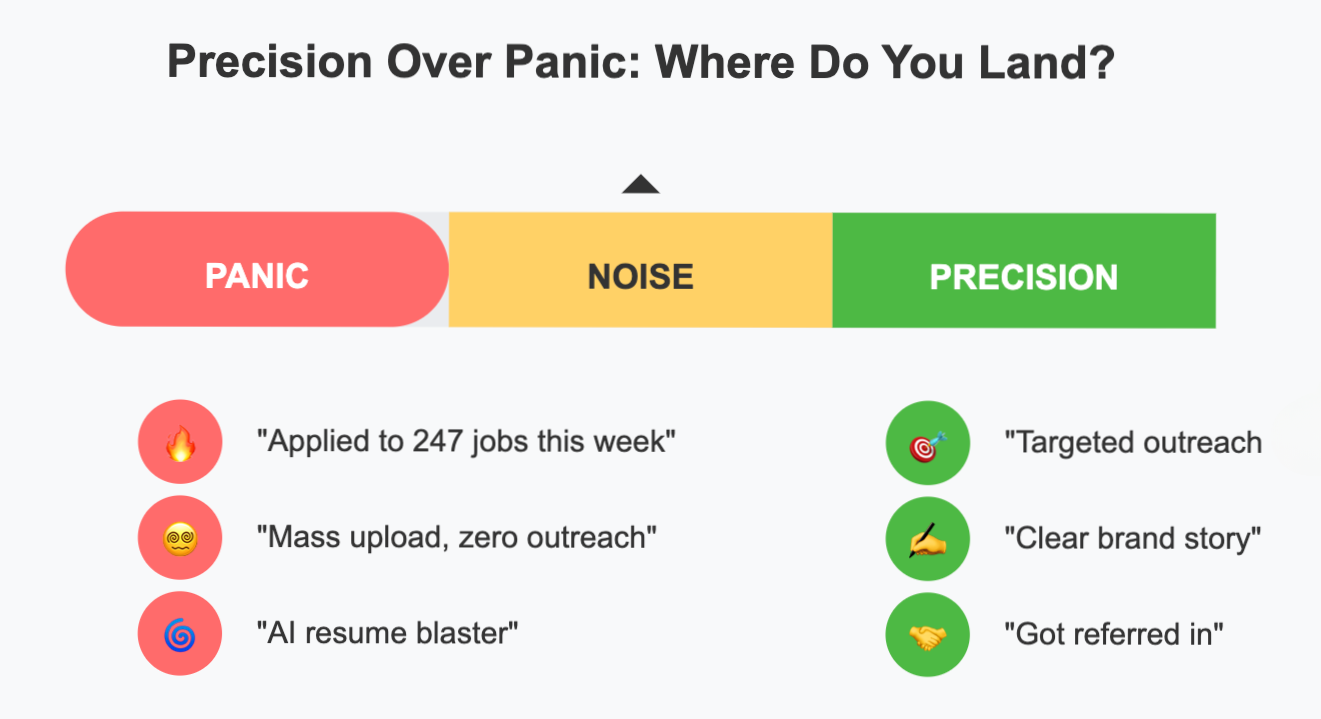
If you’ve applied to 247 jobs this month and heard back from... maybe one? It’s the modern job seekers story. But it doesn’t have to be.
The job market isn’t completely broken per se. But the way people are using it kind of is. We’ve slipped into panic mode:
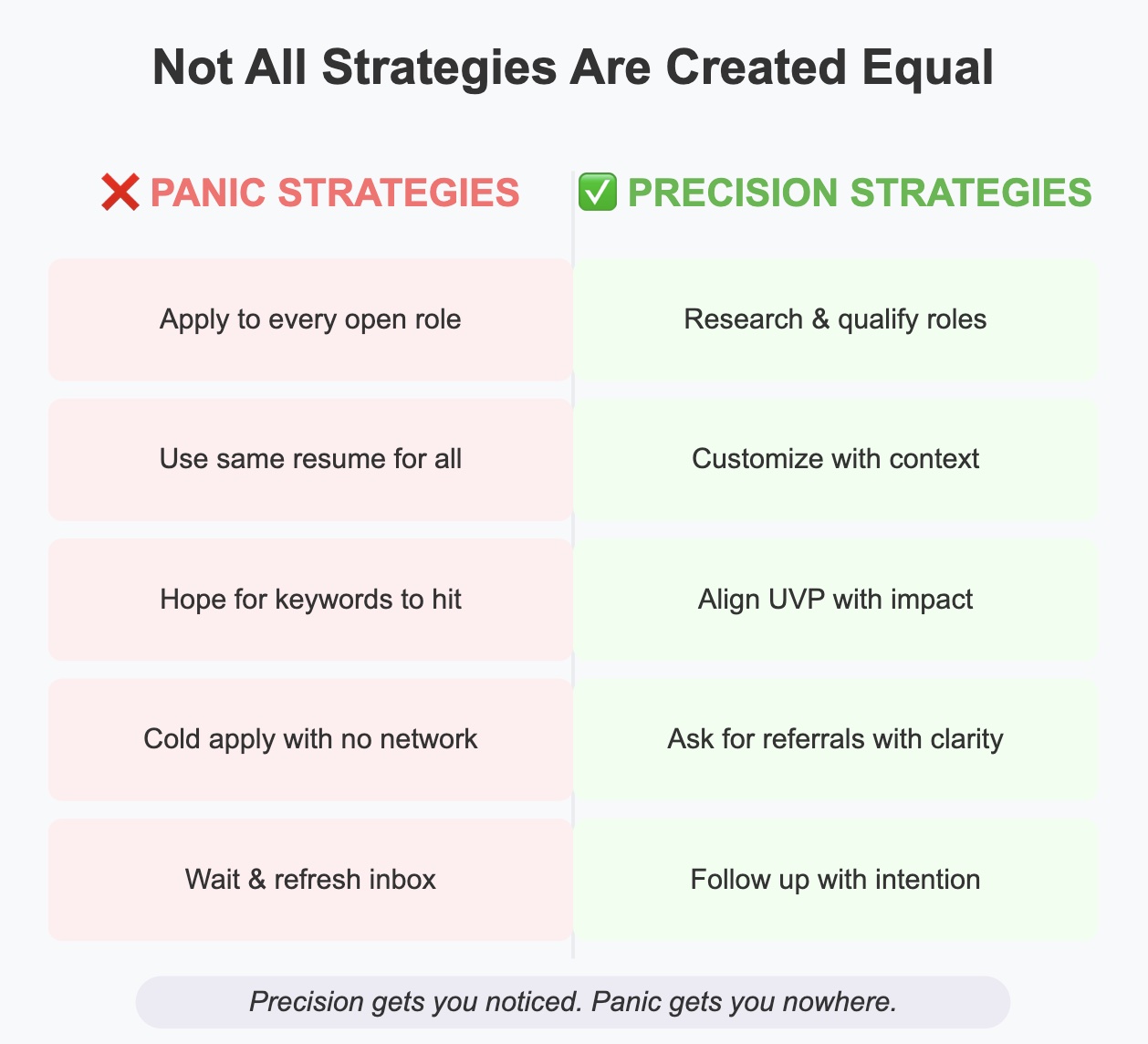
Scroll. Apply. Repeat. Easy Apply. Mass uploads. Keyword stuffing.
And it’s not working out very well, is it?
Candidates are exhausted. Hiring teams are overwhelmed. And everyone’s asking: Where is the signal in this noise?
It’s time for a reset.
The volume trap
According to Greenhouse and Lever, some roles are now seeing 40%+ more applicants than just a year ago. But hires aren’t increasing at the same rate.
Why?
Because the vast majority of applicants aren’t a true fit. They’re close. An almost. Maybe. "I could do that."
But recruiting has never been about "I could do that."
It’s about the right fit.
Harsh
Now this might come across as harsh, but this whole piece is a little harsh:
“…the medicine is harsh. But the patient requires it in order to live.”
Margaret Thatcher said this. And she said it because it had to be said at a very dark time when she was Prime Minister of the UK.
I’m no Margaret Thatcher but if you want to live through this job search or better, if you want your turn at bat to interview, you have to do your part. And your part is to be exact in your search.
No more applying to “close,” “maybe,” or “almost” roles.
Good news: You can stop. Because volume doesn’t work. It’s not just inefficient. It’s driving you insane. Heck, I’m not even looking for a job and it’s driving me batty.
Why this volume is happening (the psychology behind it)
Let’s break down what’s feeding the chaos:
> Fear-based job hunting – "What if nothing lands?"
> FOMO – "What if this role closes tomorrow?"
> Easy Apply fatigue – It’s too easy to apply, so everyone does.
> AI resume blasters – Yep, they’re out there.
> Vague job descriptions – If no one knows what you want, everyone assumes they’re a maybe.
Why referrals always win
Let’s talk about what’s actually working: referrals.
> Referred candidates are 7x more likely to be hired.> Referral hires are 40% more likely to stay a full year.
Referrals work because they cut through the noise. They’re not just a resume. They’re a person. They come with context, culture alignment, and credibility.
You can't hit a home run if you never get up to bat. And applying without a referral often means... you never even get to step up to the plate.
Figure out how to become a referral.
How to get referred in
Referrals aren’t just for insiders. Here’s how to do it even if you don’t know anyone (yet):
1. Identify the “players.”
Who’s hiring? Who’s leading the team? Who’s already on it? Start gathering names.
2. Engage without DM.
Like, comment, and contribute to each player’s posts. Be meaningful, insightful. Compliment if deserved. Let your positive self shine through.
3. Reconnect with past colleagues.
Check in. Ask for advice. Mention you’re considering the company. Then ask for an intro or referral.
4. Make it easy to refer you.
Remove friction and write your own intro blurb for your referrer to use. Be specific: do you want a referral, an intro to the recruiter, an intro to the hiring leader (golden).
5. DM “players” with a specific message.
Ask for insight or advice or a perspective on something they know about. Don’t ask for a job yet. Every couple days and repeat step 5 with a different approach each time until you get through.
6. Rinse and repeat
Repeat steps 1 through 5 with anyone at the organization that can help you learn about the organization, the job, or anything you want to know. Please do the same for each fit you find. The fit that says: “YES! This could be it. This could be the one!”
And hiring teams… let’s talk.
All you folks on the hiring side? You're in this too. Yes, sorting through 500+ applicants is brutal. But part of the problem is yours.
Let’s talk about the job descriptions:
> Too vague.
> Buzzword-heavy.
> Asking for a “strategic visionary who’s also cool with managing invoices.”
Sound familiar?
Want better applicants? Include precise specs.
> Be outcome-driven.
> Separate must-haves from nice-to-haves.
> Use language that attracts the right 10—not the wrong 1000.
Because precision attracts the right candidates. And precision produces offers and hires.
Objections and a reality check
> "But I don’t have a network." You don’t need a big network. You need a smart one. Start small. Be intentional.
> "Why bother being precise if companies ghost me anyway?" Because relevance still gets rewarded. Precision helps you rise above the noise.
> "‘Easy Apply’ exists for a reason." So does fast food. Doesn’t mean it’s your best option.
>"Isn’t it the company’s job to find me?" Maybe. But have you optimized your LinkedIn profile? How about that resume?
Want to show up in the right searches? Be precise in your story, your brand, and your positioning. (I can help with this. Ask me how.)
Precision > panic: the bottom line
Let’s make it crystal:
> Candidates: Stop applying to “I could do that” roles. Start applying to “This is it, this is mine” roles.
> Hiring teams: If you’re getting hundreds of applicants and only 3 are close, review the position description. It might be the problem.
> Referrals work. Get referred in.
> “Easy Apply” isn’t a strategy. It’s a tool. Use it intentionally.
> Want to be found? Then be findable. Be clear. Be precise.
“Precise might be nice and sound cute. But in this market? Precision is survival.”
Be precise.
All questions, comments, feedback, and suggestions welcome.
Like what you read? Please like, subscribe and share with a friend!
I’m Ken: career coach, executive recruiter, entrepreneur, technology and AI geek. Founder of Persel Group Hiring Advisors.
(I help. I don’t bite. ;)